Read Our Latest Blog Posts:
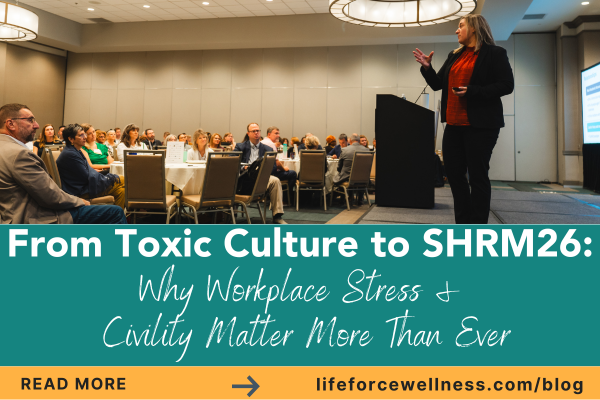
From Toxic Culture to SHRM26: Why Workplace Stress and Civility Matter More Than Ever
This time next week, I will have the opportunity to speak at the SHRM National Conference in Orlando, Florida, one of the world's largest HR and workplace leadership conferences. I am excited to share that I'll be presenting two topics that are generating significant conversation in workplaces today:
Don't Push My Buttons: How Leaders Trigger Workplace Stress
and
Plays Well With Others: Civility for Grown-Ups at Work
While I'm honored to have the opportunity to share these presentations on a national stage, the truth is these topics are deeply personal to me. For years, I worked in the oil and gas industry. It was a fast-paced, male-dominated environment where I was often the only woman in leadership meetings and operational discussions.
I loved the work.
I loved solving problems.
I loved helping people.
What I didn't love was the culture.
Like many organizations, there were times when fear, frustration, blame, and poor communication overshadowed trust, collaboration, and respect.
The owner and I had more than a few shouting matches throughout my tenure. Ironically, many of those disagreements ended with him apologizing later because, in the end, I was often right. But being right didn't always matter in the moment.
What mattered was the environment.
The anxiety.
The constant pressure.
The feeling that you had to be on guard.
The discouragement that came from trying to do the right thing in a culture that often rewarded something different. At the time, I didn't realize how much that environment was affecting my health. It wasn't until after I left that I began to understand the physical and emotional toll it had taken on me.
Looking back, that experience shaped much of the work I do today.
People Don't Leave Bad Jobs. They Leave Bad Cultures.
You've probably heard the phrase:
"People don't leave bad jobs. They leave bad bosses."
I think there's truth in that. But I think there's an even bigger truth.
People leave bad cultures.
The question then becomes:
Do bad bosses create bad cultures?
Or do bad cultures create bad bosses?
The answer is probably both.
Culture and leadership constantly influence one another. Leaders set the tone through their behavior, communication, and decision-making. At the same time, organizations can unintentionally reinforce unhealthy habits, stress responses, and behaviors that eventually become part of the culture itself.
That's why workplace wellness isn't just about yoga classes, healthy snacks, or stress management tips. It's about the environment people walk into every day. It's about whether employees feel respected, heard and psychologically safe enough to ask questions, admit mistakes, offer ideas, and challenge assumptions without fear of embarrassment or retaliation.
Why Stress and Civility Matter Right Now
The workplace is changing. Employees are burned out. Managers are overwhelmed. Teams are more divided than ever.
Stress levels remain high, and many organizations are struggling with communication, accountability, conflict, and trust.
The presentations I'll be delivering at SHRM address two of the most important questions facing organizations today:

How do leaders unintentionally create stress for their employees?
And
How do we create workplaces where people can disagree, collaborate, and communicate respectfully?
These aren't just HR issues.
They're business issues.
They're retention issues.
They're productivity issues.
And increasingly, they're health issues.
My Mission
When I founded Life Force Wellness, I made it my mission to help leaders recognize the connection between workplace culture, employee well-being, and long-term health before the damage becomes permanent.
I want organizations to understand that workplace stress isn't simply part of the job.
I want leaders to understand that their words, behaviors, and actions have a ripple effect on the people they lead.
And I want employees to know that healthy workplaces are possible.
Every day, I have the privilege of working with leaders and organizations across the United States to create cultures that are healthier, more resilient, and more productive.
The two presentations I'll be delivering at SHRM are simply a snapshot of that work.
Because when we improve workplace culture, we don't just improve performance.
We improve lives.
And that's work worth doing.
Ready to create a healthier workplace culture?
Whether you're looking to reduce workplace stress, improve communication, strengthen psychological safety, or build more effective leaders, Life Force Wellness can help.
Book a complimentary consultation to discuss leadership training, webinars, coaching, or culture-building programs tailored to your organization.
Schedule a conversation:
https://calendly.com/lfwellness/30min

Contact
© Copyright 2023. Life Force Wellness. LLC.. All rights reserved.