
Read Our Latest Blog Posts:
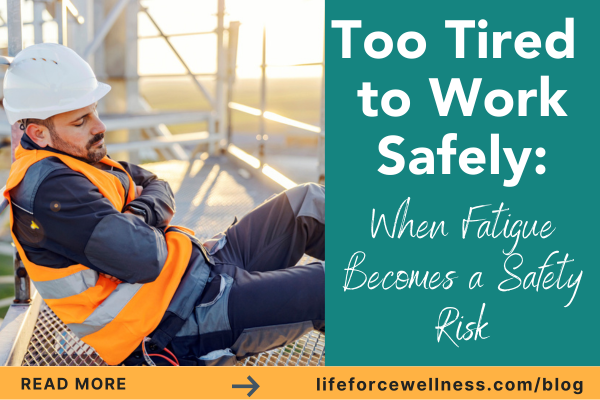
Too Tired to Work Safely: When Fatigue Becomes a Safety Risk
When we think about workplace safety, we tend to think about hard hats, protective equipment, equipment inspections, safety procedures, and proper training.
We think about the hazards we can see. But one of the most dangerous workplace hazards may be much harder to spot: a tired employee trying to push through one more hour, one more task, or one more shift.
This week, August 10–16, is OSHA’s Safe + Sound Week, a nationwide event focused on recognizing workplace safety and health programs and finding proactive ways to protect employees.
It is also the perfect time to talk about fatigue.
Because fatigue is not simply a personal wellness problem, on a job site, behind the wheel, around machinery, in a healthcare facility, or anywhere employees make decisions that affect other people, fatigue is a workplace safety hazard.
“Tired” Is Not Always Harmless
We often talk about exhaustion as if it is something to be proud of.
“I only slept four hours.”
“I’ve been working for 12 hours straight.”
“I’ll rest when the job is done.”
In some industries, being able to push through exhaustion is treated almost like a badge of honor. Employees may worry that admitting they are tired will make them appear weak, unreliable, or unwilling to work. But fatigue affects far more than our energy.
According to the National Institute for Occupational Safety and Health, fatigue can slow reaction time, reduce concentration, limit short-term memory, and impair judgment. It can be connected to extended hours and night shifts, but it can also result from stress, physically or mentally demanding work, and working in hot environments.
Those are not minor inconveniences. They are abilities people rely on to work safely.
A fatigued employee may:
Miss a step in a familiar process
Overlook a warning sign
React too slowly to a changing situation
Forget an important instruction
Misjudge distance, speed, or risk
Struggle to communicate clearly
Become impatient or take an unnecessary shortcut
Make a decision they would not normally make when rested
Most fatigued employees are not careless. Their brains and bodies simply do not have the same capacity they would have if they were adequately rested and recovered.
Fatigue Does Not Affect Only the Tired Employee
Fatigue becomes especially dangerous when an employee’s actions affect other people.
One missed detail could put a co-worker in harm’s way. A delayed reaction could cause an equipment accident. Poor judgment could create a near miss. A tired employee could complete an entire shift without an incident and then struggle to stay awake while driving home.
I was greatly concerned about my team when I worked in the oil and gas industry. I knew they were pushing themselves hard to meet deadlines, working long hours day in and day out. To support them, I would often stay late at the office, keeping a pot of coffee ready for them. I also made it a point to check if they were fit to drive home. On several occasions, I arranged for family members to pick them up because I worried they might fall asleep at the wheel.
OSHA reports that accident and injury rates are 18% higher during evening shifts and 30% higher during night shifts compared with day shifts. Research cited by OSHA also associates working 12 hours per day with a 37% increased risk of injury.
That does not mean every night shift or long day will lead to an accident. It does mean organizations should stop treating fatigue as something employees are expected to overcome through willpower alone.
Coffee can temporarily increase alertness, but it cannot replace sleep. An energy drink cannot restore impaired judgment. And telling people to “be careful” does not address schedules, workloads, staffing shortages, or workplace cultures that encourage employees to hide their exhaustion.
Fatigue Is Not Always a Personal Failure
Yes, employees have a responsibility to care for themselves. Healthy sleep habits, good nutrition, hydration, movement, and stress management can all support energy and alertness. But workplace fatigue cannot be solved entirely by telling employees to go to bed earlier.
An employee may be exhausted because of choices made outside of work. They may also be exhausted because of:
Extended or unpredictable shifts
Mandatory overtime
Consecutive workdays without adequate recovery
Understaffing
Heavy physical demands
Excessive heat
High-stress or emotionally demanding work
Constant schedule changes
A workload that cannot reasonably be completed during scheduled hours
A workplace culture that rewards people for never stopping
If the organization contributes to the fatigue, the organization must also be part of the solution. This is where the conversation moves beyond individual wellness and becomes a leadership and safety issue.
Can Employees Safely Say, “I’m Too Tired”?
A strong safety culture depends on employees feeling comfortable speaking up before something goes wrong.
We often encourage employees to report unsafe equipment, hazardous conditions, or violations of safety procedures. But do they feel equally comfortable saying:
“I am having trouble concentrating.”
“I do not feel alert enough to operate this equipment.”
“I need a short break before I continue.”
“I am concerned about driving home safely.”
“I think this schedule is creating a safety risk.”
If employees believe they will be mocked, punished, or labeled as lazy for acknowledging fatigue, they will probably remain silent and attempt to push through. That silence does not make the workplace safer. It simply hides the hazard.
Psychological safety and physical safety are closely connected. Employees must be able to report concerns, admit mistakes, ask questions, and acknowledge when they are not functioning at their best without fearing retaliation.
Leaders do not need to eliminate every difficult day or demanding shift. They do need to create an environment where legitimate safety concerns can be raised and addressed.
What Employers Can Do
OSHA recommends examining workplace factors such as workloads, work hours, understaffing, and employee absences that may contribute to fatigue. It also encourages employers to provide adequate opportunities for breaks and sleep, adjust working conditions when possible, educate employees about fatigue, and consider implementing a formal fatigue risk management plan.
That may sound like a major undertaking, but organizations can begin with a few practical questions:
1. Look at the schedule, not just the employee
When someone appears exhausted, do not immediately assume they lack commitment, motivation, or healthy habits.
Look for patterns. Are employees regularly working extended shifts? Are certain departments chronically understaffed? Are people receiving enough time to recover between shifts? Are the most safety-sensitive tasks occurring at the end of long work periods?
Fatigue may be an employee issue, but it may also be a systems issue.
2. Make fatigue part of safety training
Employees and supervisors should know how to recognize common signs of fatigue, including frequent yawning, irritability, difficulty concentrating, slower responses, forgetfulness, reduced coordination, and poor decision-making.
Fatigue awareness should not be limited to night-shift employees. It can affect anyone in any industry.
3. Encourage brief, meaningful breaks
When someone is already fatigued, continuing to work without stopping does not necessarily improve productivity. It may increase the likelihood of mistakes, rework, injuries, and equipment damage.
Even short opportunities to hydrate, eat, move, cool down, or step away from intense concentration can help employees reset during a demanding shift.
4. Pay attention to the work environment
Heat, poor lighting, repetitive work, noise, and physically demanding conditions can intensify fatigue.
Employers may not be able to eliminate every contributing factor, but they can examine whether adjustments to lighting, temperature, task rotation, break timing, or physical surroundings could support alertness.
5. Create a clear reporting process
Employees should know what to do if they believe fatigue is affecting their ability, or a co-worker’s ability, to work safely.
Who should they tell? What happens next? Can responsibilities be adjusted? Will the concern be handled respectfully?
A policy is only useful when employees believe they can use it without being punished.
6. Train supervisors to respond appropriately
A supervisor’s reaction determines whether employees will speak up again.
If a worker reports fatigue and is immediately embarrassed in front of the team, others will learn to remain silent. Supervisors need a consistent process for evaluating the risk, responding to the immediate situation, and identifying any scheduling or workload patterns that contributed to it.
Safety Is More Than Avoiding an Accident
The absence of an accident does not automatically mean a workplace is safe.
Sometimes organizations are relying on exhausted employees, informal workarounds, and good luck. Near misses may go unreported. People may regularly push themselves beyond their limits because “nothing bad has happened… yet.”
Safe + Sound Week is an opportunity to pause and examine what may be hiding beneath the surface.
Are employees rested enough to work safely?
Are schedules allowing adequate recovery?
Are managers watching for signs of fatigue?
Can employees speak up before exhaustion leads to an incident?
Are we addressing the conditions creating fatigue, or simply asking people to push through them?
Workplace safety is not only about the equipment employees wear or the procedures written in a manual. It is also about whether people have the physical and mental capacity to follow those procedures, make sound decisions, and respond when something unexpected happens.
A tired employee is not necessarily an unsafe employee. But unrecognized, unmanaged, and unreported fatigue creates a risk no organization should ignore.
This Safe + Sound Week, let’s expand the safety conversation to include the hazard we cannot always see. Because sending employees home safe means making sure they are alert enough to get there.
If you are interested in learning more about fatigue on the jobsite or would like other resources, please get in touch with me at [email protected] or book a call at https://calendly.com/lfwellness/15-minute-discovery-session
Sources: OSHA Safe + Sound Week, OSHA: Worker Fatigue Hazards, OSHA: Preventing Worker Fatigue, and NIOSH: Fatigue and Work.

Contact
© Copyright 2023. Life Force Wellness. LLC.. All rights reserved.